Author: JW Date Posted:16 September 2026
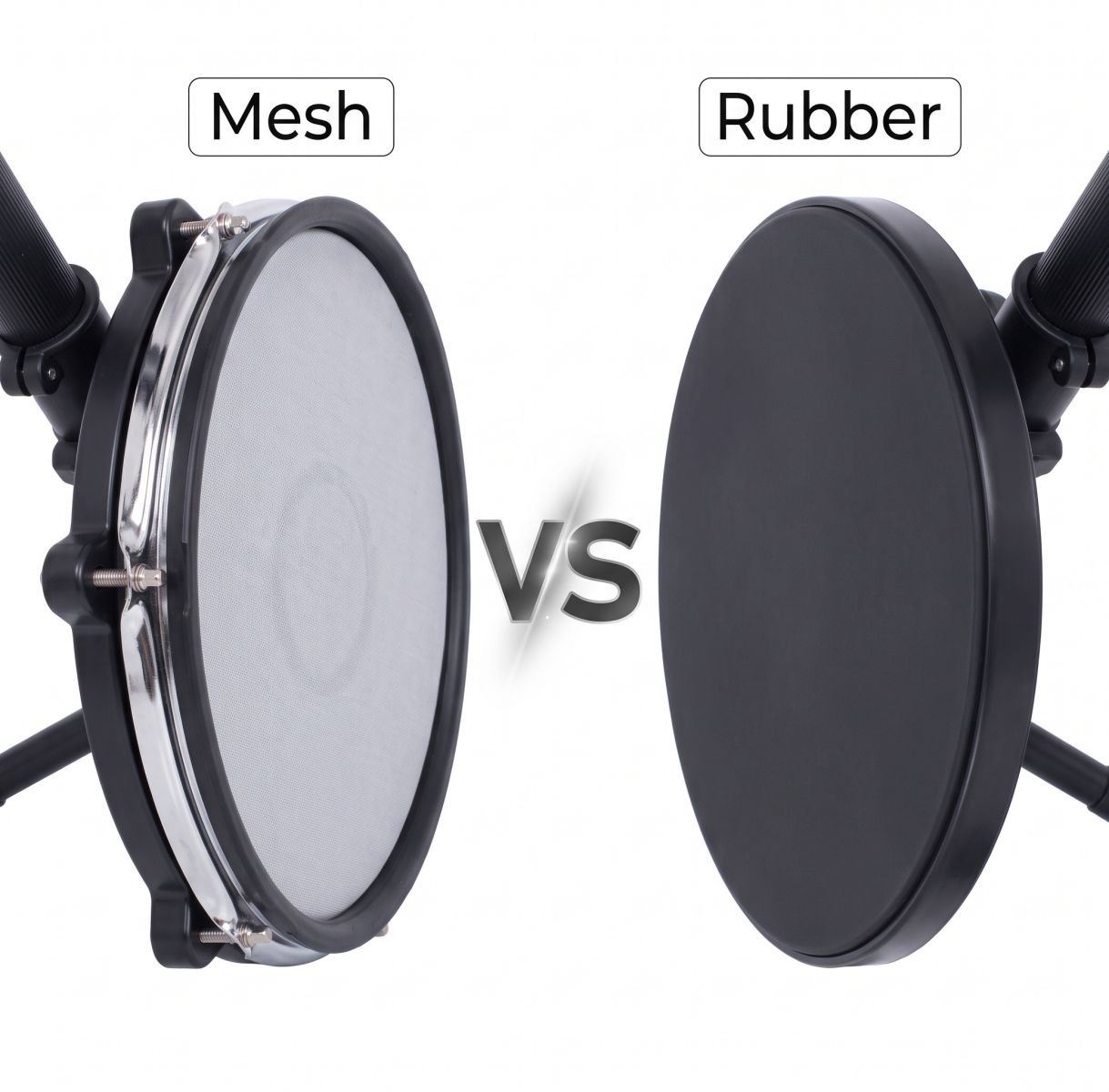
When shopping for an electronic drum kit, it's easy to assume that most pads and pedals are interchangeable. After all, if they use similar-looking connections, shouldn't they all work together?
Unfortunately, it’s not quite that simple.
Electronic drum pads and pedals use different triggering technologies, and choosing the wrong combination can lead to poor response, missed hits or equipment that simply doesn't work as intended.
Let's look at two common areas of confusion: mesh vs rubber heads and switch pedals vs pad pedals.
The playing surface of an electronic drum pad has a big impact on how it feels — and how the trigger underneath responds.
Rubber heads are typically firm and durable. When you strike the surface, the impact travels quickly through the rubber to the trigger sensor. This produces a relatively strong and immediate signal.
Mesh heads are made from woven material and are tensioned similarly to an acoustic drum head. They absorb more of the initial impact and provide a softer, more natural rebound. The important thing to remember is that the trigger system underneath is designed around the characteristics of the playing surface.
A mesh head isn't just a rubber head with different material on top.
Mesh pads often use trigger cones, different sensor arrangements and isolation systems designed to detect the softer, more distributed vibration produced by a mesh surface. Rubber pads are generally designed around the stronger, sharper impact produced by a solid rubber surface.
Swapping one for the other can therefore result in:
• Inconsistent triggering
• Double triggering
• Missed notes
• Poor sensitivity
• Centre hot-spotting
• Unnatural dynamics
For this reason, mesh and rubber pads should be treated as different types of electronic drum triggers, rather than interchangeable surfaces.
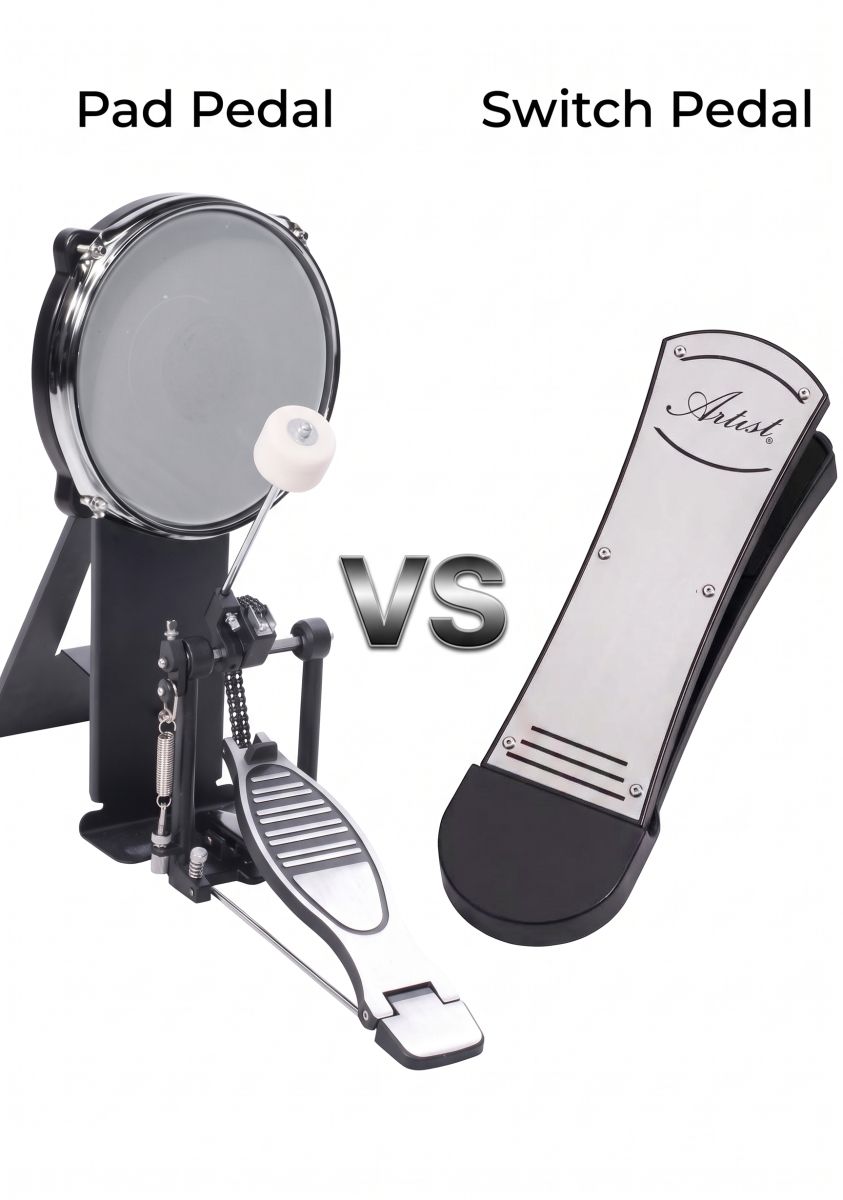
The same principle applies to electronic drum pedals.
A switch pedal is essentially an on/off trigger. When you press it, the switch sends a simple signal to the drum module indicating that the pedal has been activated.
A pad-style kick pedal, however, is designed to work with a separate kick pad. The pedal strikes the pad's playing surface, and the sensor inside the pad detects the impact.
These are two completely different ways of triggering a drum sound.
Why Can't You Swap Them?
A switch pedal doesn't produce the same type of signal as a kick pad.
A module input designed to detect a switch-style pedal is looking for a simple trigger event. A kick pad input, on the other hand, is designed to interpret the signal from a piezo trigger and can respond to factors such as playing strength and velocity.
As a result, plugging a switch pedal into an input designed for a kick pad — or trying to use a kick-pad setup where a switch pedal is required — may not produce the expected results.
What Should You Check Before Buying?
Before mixing or upgrading components, check:
• What type of pad or pedal the drum module supports
• Whether the input is designed for a switch or pad trigger
• The manufacturer's recommended compatibility
• The correct trigger settings or presets
• Whether the required cable and connection type are compatible
Remember, a compatible-looking plug doesn't necessarily mean two pieces of electronic drum equipment are compatible.
The Bottom Line
Mesh and rubber pads have different trigger characteristics, while switch pedals and pad-based kick systems use fundamentally different triggering methods. Using the correct combination will give you better sensitivity, more reliable triggering and a much more enjoyable playing experience.
If you're unsure whether a particular pad, pedal or module will work with your setup, always check the manufacturer's compatibility information before making the switch.
Thanks for reading this blog! For even more great content, check out these pages:
I hope this article has helped. if you need any assistance please email:
sales@artistguitars.com.au or call us on 1300 489 816
© Artist Guitars 2026


We started Artist Guitars with a simple belief: quality instruments shouldn't cost the earth. By working directly with our manufacturing partners and selling straight to you, we skip the traditional retail markups that inflate prices. Need expert advice? We’ve got you covered. Our team of musicians is here to help you find exactly what you're looking for.

Read what the Artist Community have to say.
Need more info? You can find it here.
In stock products are dispatched from our warehouse just outside of Yennora within one business day of purchase. To get an estimate for shipping to your post code please use the Shipping Time Estimator on the product listing.
Drop us an email with your order number and a short explanation for why you'd like to return your purchase. We'll organise a return label for you to print and attach to the box then either drop into your local post office or we can arrange a courier collection if necessary.
If your item arrives damaged we have you covered! Just contact our Customer Happiness team at sales@artistguitars.com.au and we'll arrange a return and replacement for you as soon as possible.
All orders placed on our Australian website are dispatched directly from our local warehouse in Yennora, Sydney (NSW). This ensures fast, reliable delivery right across Australia.
You should receive an order confirmation shortly after you've placed your order. If you haven't received one, please contact us at sales@artistguitars.com.au and we'll look into it for you.
We sell direct to consumer! This helps us keep the cost of our products as low as possible and we pass those savings into our customers which is why our guitars are unbeatable value.

 New Zealand
 United Kingdom