Author: Rory Wheatley Date Posted:10 January 2023
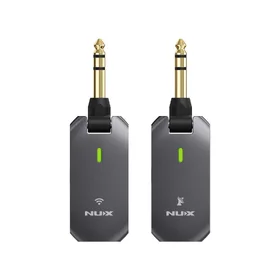
Wireless systems for instruments and microphones have come a long way in the past couple of decades, with the technology getting smaller, more efficient, and more affordable. Gone are the days when a rack-mounted wireless hub was required, and now you can slip your entire personal wireless system into the front pocket of a gig bag!
Read on if you want to understand this further!
There are a few things that are important to understand when it comes to wireless systems, and one of the most common questions we are asked is about how many devices can be connected at once. This will vary depending on the capabilities of the device, but generally speaking, this number will come down to the bandwidth that the devices operate on; these modern portable devices usually operate at either 2.4 or 5.8GHz (gigahertz).
The answer is, most devices operating at 2.4GHz will be able to handle 6 separate connections without suffering interference or loss of signal. Those operating at 5.8GHz can usually handle 10 connections, and with both bandwidths in use, up to 16 separate devices can operate. You can use both bandwidths together, but different brands (eg. NUX and Shure) may experience issues, I will explain this further below.
For the best experience with your wireless devices, try to use them in spaces free from obstruction or other interference, especially routers, smart devices, and neon lights.
So there you have it, simply put you can use up to 6 devices with a 2.4G device, and up to 10 with a 5.8G device, together these can make up to 16 devices in ideal conditions. Read on if you’d like some more technical explanations on why this is, and how exactly these devices work.
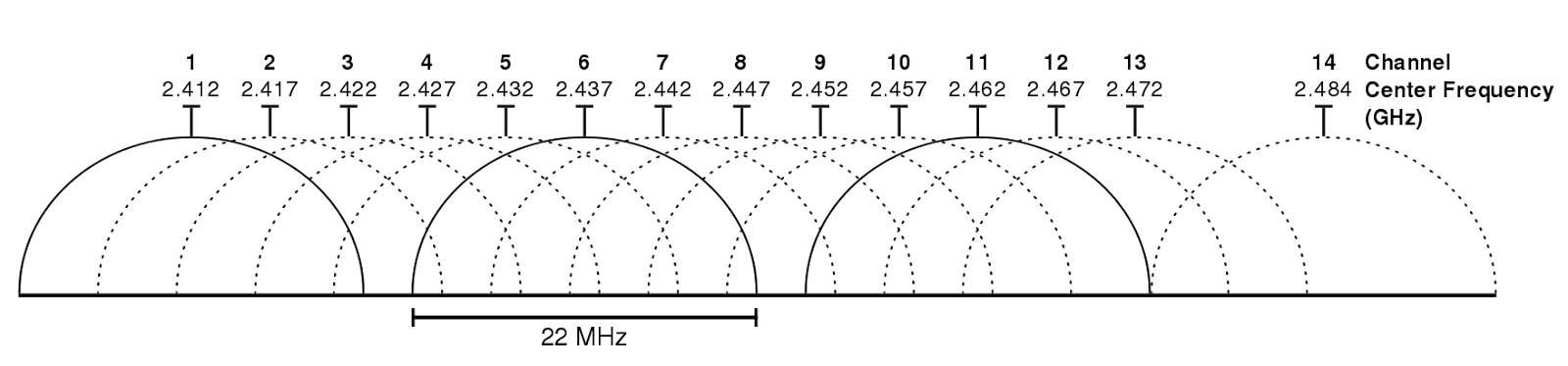
First, it is important to understand that “bandwidth” is the term used for the total amount of data transferable within a single second, in what's called a “data packet”. Also, devices are often listed as having a frequency of 2.4G, but this is not exactly true; 2.4G is a general term, and this actually refers to a bracket of frequencies between 2.400GHz and 2.483GHz. This frequency band can be divided into groups of 22MHz, without any overlap between groups:
As can be seen here, the dark lines show the frequency bands that each device would operate at, with a gap between these frequencies to prevent interference or any crossover. This example demonstrates how the frequency bands are divided, and depending on how these are divided you can use multiple channels within the 2.4G band.
Also, there must be some consideration for the most common issues with these devices: interference and latency. To avoid interference, often a select few bands will be avoided by the manufacturer, usually those most commonly used for wireless routers and other home devices that will be likely to interrupt the signal.
To avoid latency, the data packets must be compressed using digital compression algorithms, which make the transfer of data fast and efficient. The issue then lies in how to compress this data without losing the high-fidelity sound quality we would expect with a wireless system. The powerful algorithms used by Nux and other manufacturers can relay this information very fast, and with a few different algorithm groups there are varying levels of latency, as low as just 4ms!
If you have any questions feel free to contact us or reach out, and please check out our great range of wireless systems


We started Artist Guitars with a simple belief: quality instruments shouldn't cost the earth. By working directly with our manufacturing partners and selling straight to you, we skip the traditional retail markups that inflate prices. Need expert advice? We’ve got you covered. Our team of musicians is here to help you find exactly what you're looking for.

Read what the Artist Community have to say.
Need more info? You can find it here.
In stock products are dispatched from our warehouse in Yennora, NSW (close to Fairfield) within one business day of purchase. To get an estimate for shipping to your post code please use the Shipping Time Estimator on the product listing.
Drop us an email with your order number and a short explanation for why you'd like to return your purchase. We'll organise a return label for you to print and attach to the box then either drop into your local post office or we can arrange a courier collection if necessary.
If your item arrives damaged we have you covered! Just contact our Customer Happiness team at sales@artistguitars.com.au and we'll arrange a return and replacement for you as soon as possible.
All orders placed on our Australian website are dispatched directly from our local warehouse in Yennora, Sydney (NSW). This ensures fast, reliable delivery right across Australia.
You should receive an order confirmation shortly after you've placed your order. If you haven't received one, please contact us at sales@artistguitars.com.au and we'll look into it for you.
We sell direct to consumer! This helps us keep the cost of our products as low as possible and we pass those savings into our customers which is why our guitars are unbeatable value.

 New Zealand
 United Kingdom