Author: Ian Bush Date Posted:18 September 2018
There are 3 main parts to valves. (1) The Plate, (2) The Grid and (3) The Cathode. (Pentode valves have an additional 2 elements, but that is out of the scope of this article). The Grid is what controls the flow of current through the valve, much like the handle on a kitchen tap controls the flow of water.
The Plate current is a measure of how much current flows through a particular valve at any point in time. That current will vary with the guitar signal and the bias. You might see on our website that certain valves show a "PC" (or Plate Current) value. The is the plate current at idle (“idle” means no guitar sound being amplified) and is one of the methods used to match up valves. (The other common method is Transconductance or Gm).
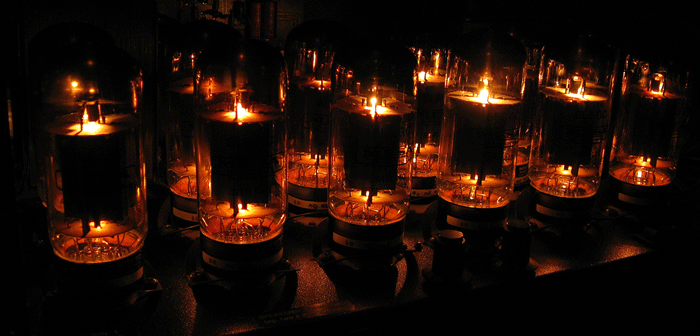
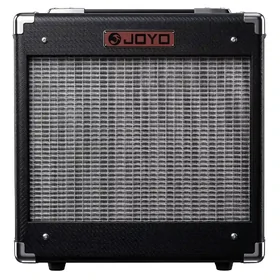
Generally speaking, single-ended amps (also known as “true” class A amps) like the famous Fender Champ and the Joyo JTA-05 don't need matched valves but anything class A/B does, even the not-quite-Class A amps like the Vox AC30 sounds much better with matched power valves. Think of “matching” like to people pulling on a rope in a tug of war. By matching your tubes, you are trying to maintain the balance between both sides.
In a class A/B amp you have 2 (or 4) valves running each side of the waveform, one valve pushes, while the other valve pulls. Ideally, you want this push and pull to be matched. If it's not matched you will have an asymmetrical waveform and get more distortion (and not the pleasant tube-style distortion that everyone wants). Power tubes which may be perfectly matched will start to drift with time. If you’re lucky, they will drift in the same direction by the same amount. If they drift in opposite directions or at different rates, it will be a good idea to swap out your power valves.
The easiest way to tell if your amp needs a matched pair is to check in your manual or do some searching on the internet. I once spent a few days with Hartley Peavey, the founder of Peavey (link https://en.wikipedia.org/wiki/Hartley_Peavey) and in his opinion valve matching and biasing was a waste and a potential source of expensive errors. Hartley’s theory is that Peavey Valve amps use matched valves and if you replace them with the same matching code, they amp won’t need rebaising. While it is true that a Cathode-biased (also known as “self-biased”) amps like the Vox AC-30 don’t need biasing, it is still important to use a matched set of power tubes.
The most common preamp valve is the trusty 12AX7. When these valves are used in the preamp section it's not generally needed to be matched. Inside the glass tube of a 12AX7 there are 2 independent gain circuits. These do the very important task of amplifying your guitar signal up from tiny levels which are susceptible to noise, and increases the signal to many volts. From here your guitar signal goes to your tone circuits, reverb, and finally is split into the 2 different phases needed by your matched and biased power tubes.
To get your Amp repaired, or the matching of your power tubes checked, just ask Chris Tarakson, The Guitar Amp Tech. You can visit his website here. Chris does all our amp repairs here at Artist Guitars so you're welcome to leave your amps at our store in Yennora for Chris to pick-up and drop off too.
Reference Links
https://www.apexmatching.com/why-should-i-match-my-tubes
https://www.duncanamps.com/technical/valvematch.html
I hope this article has helped, if you need any assistance please email:
© Artist Guitars 2018


We started Artist Guitars with a simple belief: quality instruments shouldn't cost the earth. By working directly with our manufacturing partners and selling straight to you, we skip the traditional retail markups that inflate prices. Need expert advice? We’ve got you covered. Our team of musicians is here to help you find exactly what you're looking for.

Read what the Artist Community have to say.
Need more info? You can find it here.
In stock products are dispatched from our warehouse just outside of Yennora within one business day of purchase. To get an estimate for shipping to your post code please use the Shipping Time Estimator on the product listing.
Drop us an email with your order number and a short explanation for why you'd like to return your purchase. We'll organise a return label for you to print and attach to the box then either drop into your local post office or we can arrange a courier collection if necessary.
If your item arrives damaged we have you covered! Just contact our Customer Happiness team at sales@artistguitars.com.au and we'll arrange a return and replacement for you as soon as possible.
All orders placed on our Australian website are dispatched directly from our local warehouse in Yennora, Sydney (NSW). This ensures fast, reliable delivery right across Australia.
You should receive an order confirmation shortly after you've placed your order. If you haven't received one, please contact us at sales@artistguitars.com.au and we'll look into it for you.
We sell direct to consumer! This helps us keep the cost of our products as low as possible and we pass those savings into our customers which is why our guitars are unbeatable value.

 New Zealand
 United Kingdom