Whether finding a guitar for yourself, or buying for somebody else, choosing the right guitar can be very confusing! With so many sizes and styles it's easy to get lost in information. Learning guitar is one of the most rewarding hobbies and it's very easy to steepen your learning curve at the beginning, provided you pick the right instrument.
Drawing on over 30 years or industry and technical experience, we've set out a very simple to follow guide to make this decision easy.
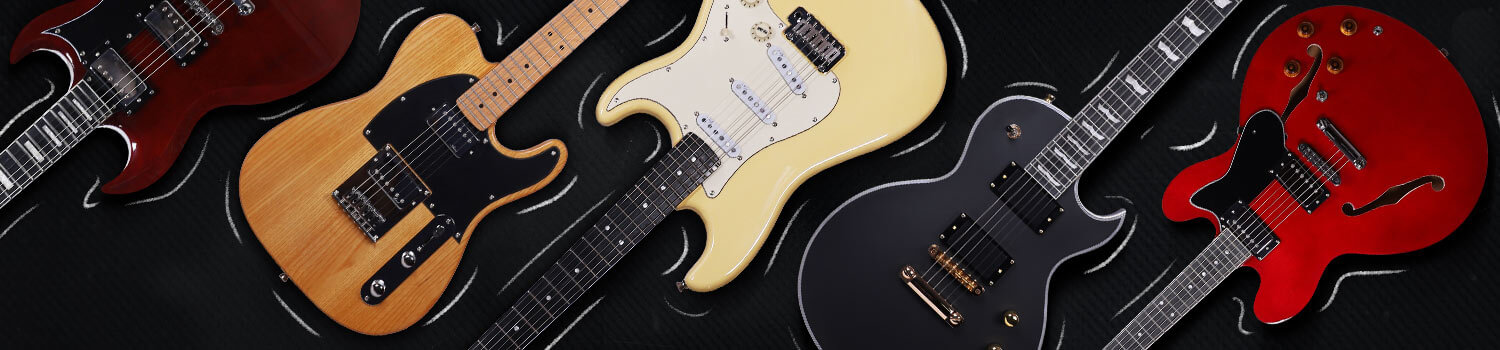
Before you start there's a little bit you'll need to know about guitar types. If you know a little about guitars already and want to get straight to the juice you can go directly to the 2 Step Process.
Though there are literally thousands of variations, we break it down for you to just 3 main types:
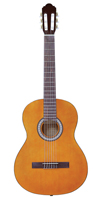
Classical guitars are essentially acoustic guitars but are a little smaller in body size and generally have a wider neck. They are strung with nylon strings which gives them a distinctive sound - not as bright as your standard steel-string guitar. Nylon string guitars are great for beginners because the nylon strings are thicker and therefore easier on your fingertips than steel-string guitars. The neck is also wider which makes the finger work a little easier if you have large hands.
Classical guitars are great for beginners, particularly younger players because they're comparatively inexpensive and easy to play. They're good for fingerpicking rather than strumming chords. The downside is that they're not as bright or loud when compared to a steel-string guitar.
You can find our range of classical guitars for beginners here.
.jpg)
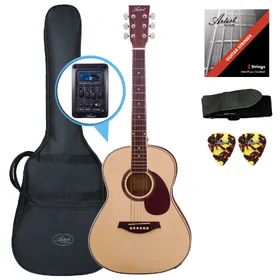
Steel string guitars are similar to classical guitars in that they are acoustic, however, they are strung with steel strings. This extra tension makes for a much stronger guitar and the steel strings give a much brighter, louder sound. These sound much better for strumming chords compared to a classical guitar, so are very popular for beginners over a certain age. The reason for this is that the steel strings can be sharp on untrained fingers.
We don't recommend steel stringed guitars for younger players because the sharper strings may be a deterrent to practicing. Until they have built up some callus and strength they may be better off with a classical guitar.
You can find our range of acoustic guitars for beginners here.
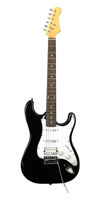
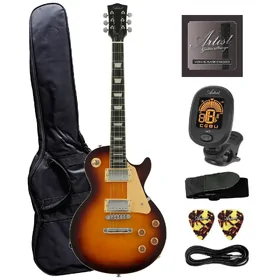
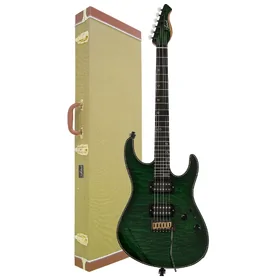
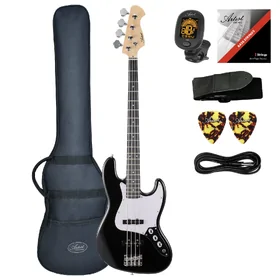
It's very hard to generalise electric guitars because the size, shape and electronics all make small differences to the sound you can produce. Electric guitars differ from the classical and acoustic because they don't make any sound without external amplification.
With the exception of some jazz electric guitars, most electric guitars don't have a cavity - they are solid wood. They produce the sound by transferring magnetic energy from the vibrating strings into electrical energy (only a very, very small voltage!). This electrical signal passes from the guitar down a cable into an amplifier where the signal is boosted. The signal can be tweaked, shaped and transformed to produce a huge variety of sounds. So while you technically you can play an electric guitar without an amp, you won't get nearly as much fun and satisfaction out of your instrument without one!
Electric guitars are a little smaller than acoustic and classical guitars so are good for most ages and heights. They're great for creativity and rocking out.
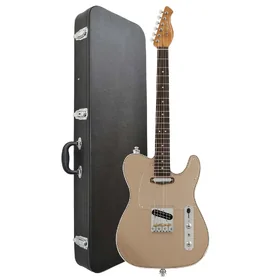
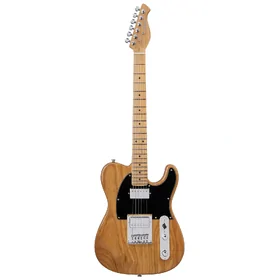
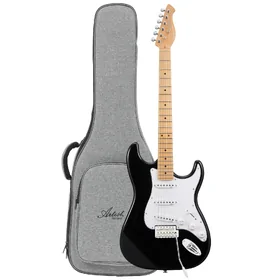
We have a range of guitars suitable for beginners because of their versatility. You can see them here.
This is a very important question. It's like trying to choose the right utensil to cook with, before you know what you want to cook. It's important to pick the right tool for the job! Have a think about what kind of music you like to listen to and what kind of music you would like to play. There are many types of guitar that are suited to different styles of music. Have a browse through your music collection and pick a few of your favourite songs.
You can give us a call, email us, or click the live chat button below. We can make a recommendation based on these songs.
Guitars are not one-size-fits-all! Picking the correct size is most important because if you are uncomfortable playing something too large for you then you will have less motivation to pick it up to play. Electric guitars are much smaller than steel-string acoustic guitars and nylon string classical guitars, they can basically be used by most people, but you do need to consider the extra weight. An electric guitar can weigh 5-6 Kg which can be difficult for children to handle. We would normally recommend children be at least 13 years before they try an electric guitar, however, some children (sometimes as young as 10) have been ok. Every child is different, and some children may be capable at a younger age, so if you consider your child to be quite strong for their age, then, by all means, go for an electric. We carry a broad range of sizes in our entry-level range. The correct size is most accurately determined by the player’s height and age.
Here's n easy size guide. You can click on the recommended size to see our recommendations!
.png)
| Age | Height (cm) | Recommended Size |
| 5 - 8 | 80 - 100 | 1/2 Size - See MiniS |
| 8 - 12 | 100 - 125 | 3/4 Size - See ST34 |
| 12+ | 125 + | Full Size - See STH |
SHOP BEGINNER ELECTRIC GUITARS
.png)
| Age | Height (cm) | Recommended Size |
| 5 - 12 | 100 - 120 | 3/4 Size - See LSP34 |
| 12 - 15 | 120 - 165 | Small Body - See LSPS |
| 15+ | 165 + | Full Size - See LSP |
SHOP BEGINNER ACOUSTIC GUITARS
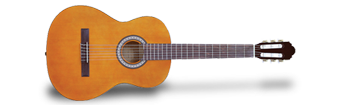
| Age | Height (cm) | Recommended Size |
| 2 - 5 | 75 - 100 | 1/4 Size - See CL14 |
| 5 - 8 | 100 - 125 | 1/2 Size - See CL12 |
| 8 - 12 | 125 - 165 | 3/4 Size - See CL34 |
| 12+ | 165 + | Full Size - See CL44* |
* A full-size classical guitar has a wider neck than other guitars. If you have small hands we recommend the CL44S slim neck classical guitar.
SHOP BEGINNER CLASSICAL GUITARS
If you would like more information on choosing the right guitar for you, then feel free to email us, give us a call or click the live chat button below.


We started Artist Guitars with a simple belief: quality instruments shouldn't cost the earth. By working directly with our manufacturing partners and selling straight to you, we skip the traditional retail markups that inflate prices. Need expert advice? We’ve got you covered. Our team of musicians is here to help you find exactly what you're looking for.

Read what the Artist Community have to say.
Need more info? You can find it here.
In stock products are dispatched from our warehouse in Yennora, NSW (close to Fairfield) within one business day of purchase. To get an estimate for shipping to your post code please use the Shipping Time Estimator on the product listing.
Drop us an email with your order number and a short explanation for why you'd like to return your purchase. We'll organise a return label for you to print and attach to the box then either drop into your local post office or we can arrange a courier collection if necessary.
If your item arrives damaged we have you covered! Just contact our Customer Happiness team at sales@artistguitars.com.au and we'll arrange a return and replacement for you as soon as possible.
All orders placed on our Australian website are dispatched directly from our local warehouse in Yennora, Sydney (NSW). This ensures fast, reliable delivery right across Australia.
You should receive an order confirmation shortly after you've placed your order. If you haven't received one, please contact us at sales@artistguitars.com.au and we'll look into it for you.
We sell direct to consumer! This helps us keep the cost of our products as low as possible and we pass those savings into our customers which is why our guitars are unbeatable value.

 New Zealand
 United Kingdom